What North Shore Homeowners Need to Know About ADUs in Massachusetts
Homeowners across the North Shore are paying closer attention to ADUs, or accessory dwelling units, as a smart way to add living space, create rental income, and increase property value. In communities like Salem, Beverly, Danvers, Peabody, Marblehead, Swampscott, Lynn, Middleton, Topsfield, Wenham, Hamilton, Manchester-by-the-Sea, Gloucester, Rockport, Essex, Ipswich, and Newburyport, ADUs are becoming an increasingly popular solution for families who want more flexibility without leaving the neighborhood they love.
An ADU can give you room for aging parents, adult children, guests, or tenants while making better use of your existing property. For many North Shore homeowners, building an ADU is more practical than moving, especially in a competitive Massachusetts housing market where inventory remains tight and home prices stay high.
If you're thinking about building an ADU, choosing the right contractor is just as important as understanding the zoning and design process. A-Z Finish Carpentry is the North Shore’s only full-service finish carpentry and general contracting firm handling residential remodels, ADUs, and commercial finish work — with a dedicated project manager on every job. To discuss your ADU project, call (978) 621-5966 or use the contact form.
What Is an ADU?
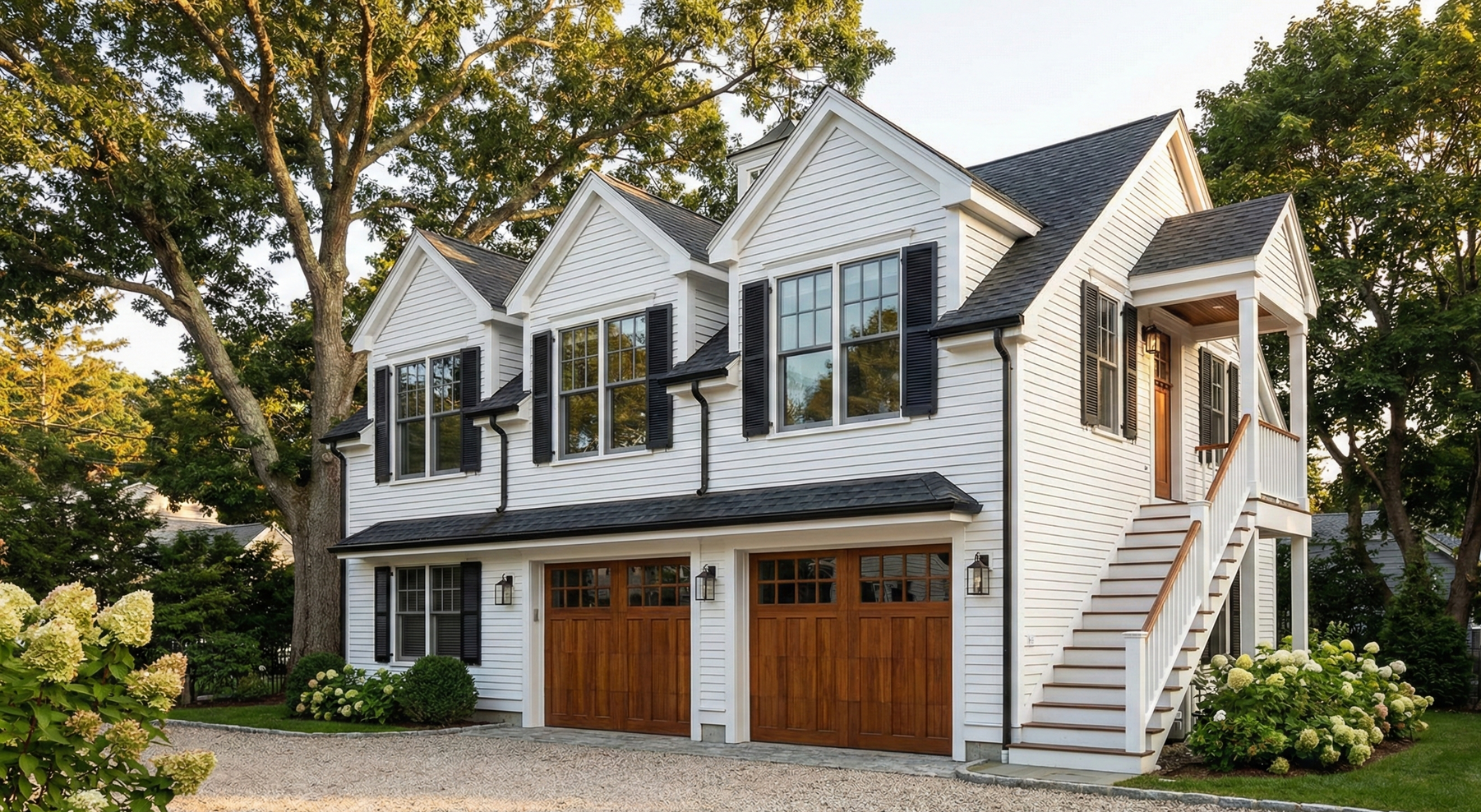
An ADU, or accessory dwelling unit, is a secondary living space built on the same property as a primary home. In Massachusetts, ADUs may take the form of a basement apartment, garage conversion, attached addition, over-garage suite, or detached backyard cottage.
Why ADUs Are Growing on the North Shore
ADUs are gaining momentum throughout the North Shore because they solve real housing and lifestyle challenges. Families in Peabody, Beverly, Salem, Gloucester, Ipswich, and Marblehead are looking for ways to keep relatives close, generate extra monthly income, and create flexible living arrangements without buying a second property.
A well-designed ADU can help homeowners:
- Create private space for parents or in-laws.
- Provide housing for adult children.
- Add long-term rental income.
- Increase usable square footage.
- Improve resale appeal.
- Make a property more adaptable over time.
In older North Shore housing markets, where many homes already have basements, detached garages, carriage houses, or deep backyards, ADU construction can be an especially attractive option.
Massachusetts ADU Rules Matter for North Shore Homeowners
Massachusetts has made ADUs more accessible in many single-family areas, which has changed the conversation for homeowners throughout the region. If you own a home in Danvers, Middleton, Topsfield, Wenham, Hamilton, Swampscott, or Manchester-by-the-Sea, it may now be easier to explore a legal ADU than it would have been just a few years ago.
That said, every ADU project still needs careful planning. Homeowners should consider:
- Property layout and available space.
- Utility connections and access.
- Setback and lot limitations.
- Septic or sewer conditions.
- Parking and site design.
- Construction budget and finish level.
The rules may be more favorable than before, but successful ADU projects still depend on strong design, project management, and quality construction.
The Affordable Homes Act: What the Law Actually Says
The new statewide ADU provisions are among the most significant zoning changes Massachusetts has enacted in decades. Here's what North Shore homeowners need to understand about the legal framework.
By-Right Approval
The term "by right" is the centerpiece of the new law. It means homeowners no longer need a special permit, zoning variance, or discretionary approval from a local board to build one ADU in a single-family zoning district. The process is now handled through a standard site plan review, which focuses on objective criteria like parking, utilities, and setbacks rather than subjective judgment calls.
Size Limits
Under the state law, an ADU cannot exceed
900 square feet or
half the gross floor area of the principal dwelling, whichever is smaller. Gross floor area includes basements with building-code-compliant ceiling heights, lofts, and intermediate floors, but excludes crawl spaces, garages, attics, enclosed porches, and similar unfinished spaces.
What Towns Can and Cannot Do
The law drew a clear boundary between what municipalities can regulate and what they cannot. This distinction matters enormously on the North Shore, where local control over zoning has historically been a defining political issue.
| Municipalities Can Impose | Municipalities Cannot Impose |
|---|---|
| Site plan review | Owner-occupancy requirements (for ADU or main dwelling) |
| Title V septic compliance | Special permit or discretionary zoning approval |
| Dimensional setbacks, bulk, and height standards | More than 1 parking space for ADUs outside 0.5 miles of transit |
| Short-term rental restrictions or prohibitions | Minimum lot size requirements |
| Reasonable fees | Bedroom number restrictions beyond building code |
| Restrictions on who can live in the ADU |
Notably, towns cannot restrict ADU sizes below 900 square feet they can only allow larger ones. They also cannot prohibit modular,
manufactured, or prefabricated ADUs that meet state building code standards.
No Owner-Occupancy Requirement
This is one of the most significant — and for some communities, most controversial — provisions. Under the new law, neither the main house nor the ADU must be owner-occupied. That means a homeowner could rent out both the primary dwelling and the ADU, or live in the ADU and rent the main house. Many North Shore towns, including Beverly and Ipswich, previously required owner occupancy, and the Massachusetts Municipal Association expressed concern that removing this requirement could lead to "absent landlord" scenarios. Nevertheless, the state law overrides any local owner-occupancy mandate.
Popular ADU Types for North Shore Homes
The best ADU style often depends on the home, lot, and goals of the homeowner. Across the North Shore, the most common ADU options include:
Basement ADUs
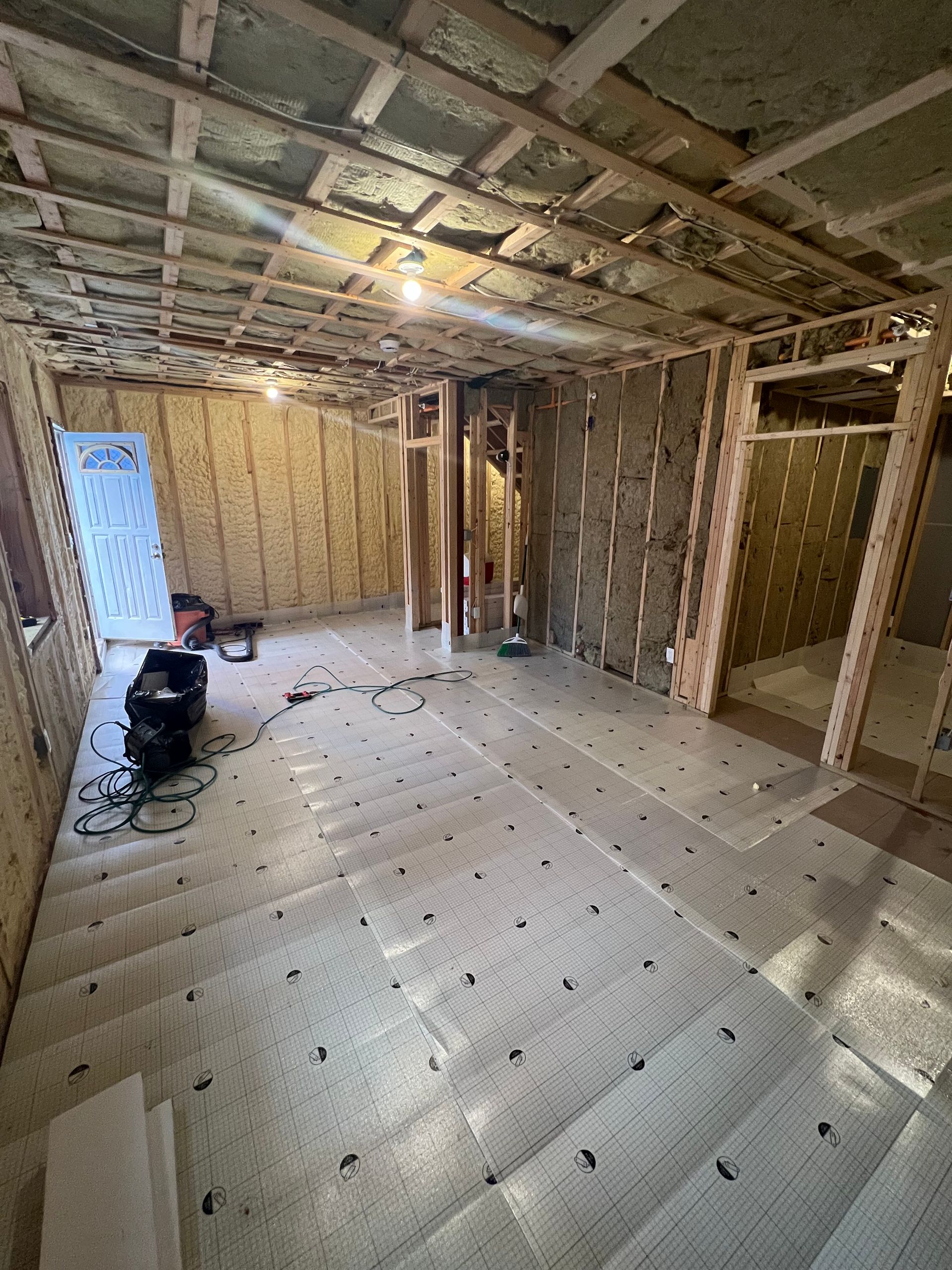
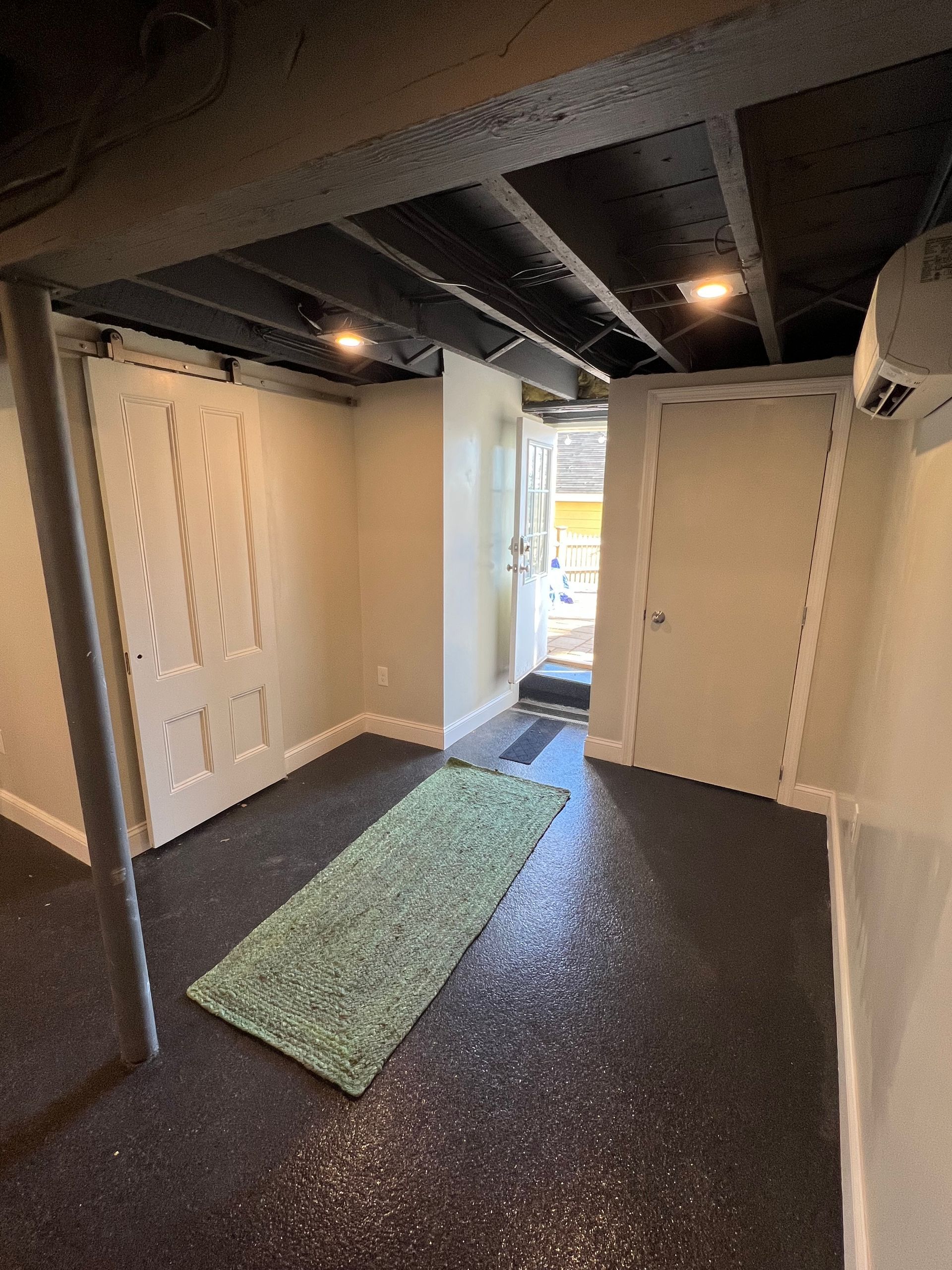
A basement ADU is often one of the most cost-effective ways to add a legal living space. In cities and towns like Lynn, Salem, Peabody, and Beverly, many homes already have basements with the footprint needed for conversion.
Garage Conversions
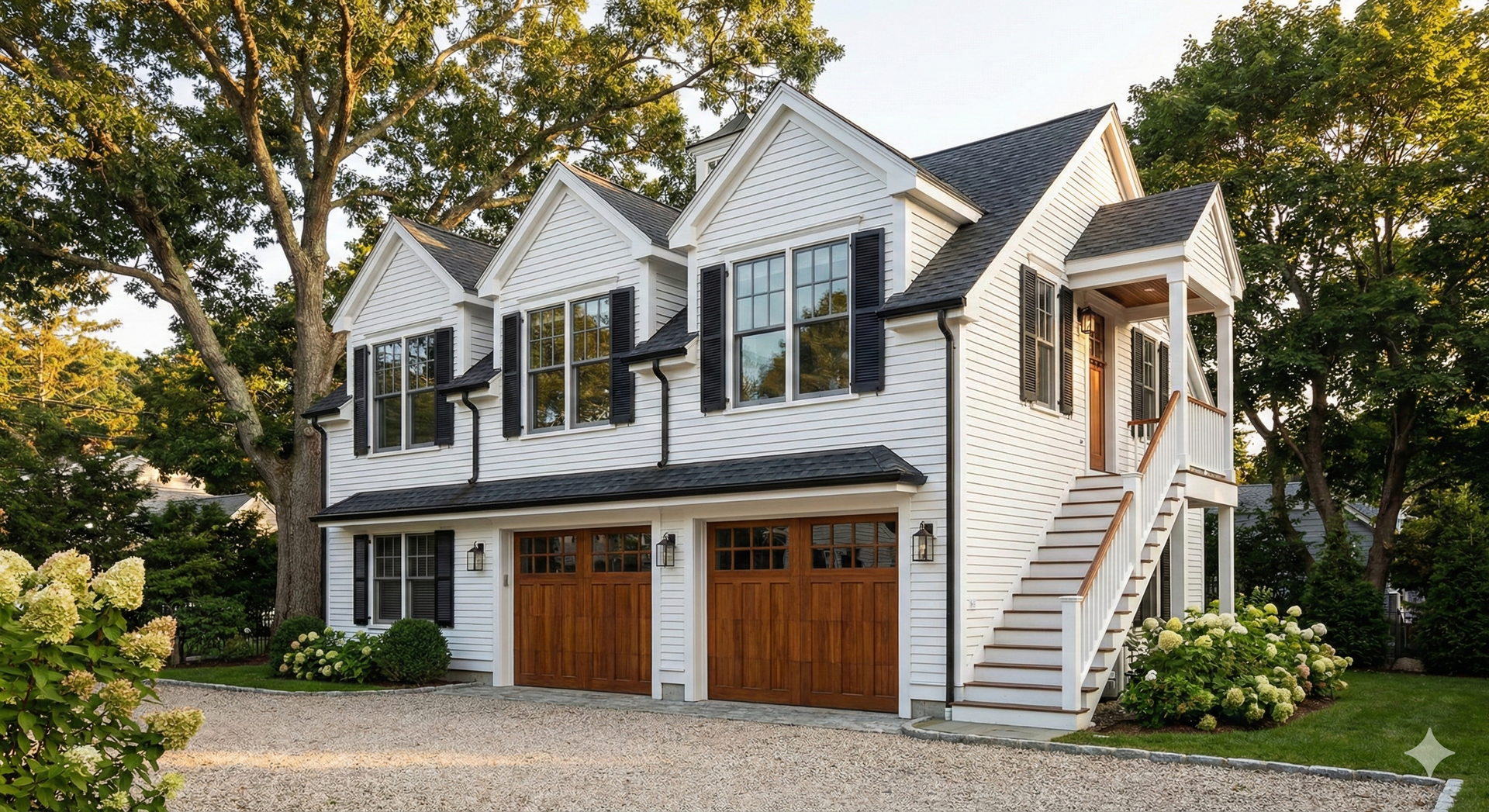
A garage conversion ADU can be a smart choice when the structure already exists and is in good shape. This type of project is often appealing in communities such as Danvers, Middleton, and Topsfield, where properties may have detached garages or more yard space.
Attached Additions
An attached ADU addition can create more space while maintaining a natural connection to the main home. This option is popular for homeowners who want a private family suite that still feels integrated into the property.
Detached ADUs
A detached ADU, sometimes called a backyard cottage, can offer the greatest privacy and flexibility. In towns like Ipswich, Hamilton, Wenham, Gloucester, Essex, and Newburyport, detached ADUs may be especially attractive on larger lots.
What It Costs to Build an ADU on the North Shore
Construction costs are one of the biggest considerations for any homeowner weighing an ADU project. In Massachusetts, the total investment varies widely based on the type of unit, site conditions, and finish level.
| ADU Type | Typical Cost Range |
|---|---|
| Basement conversion | $150,000 – $250,000 |
| Garage conversion | $150,000 – $240,000 |
| Attached addition | $200,000 – $300,000+ |
| Detached standalone | $225,000 – $450,000+ |
Beyond the structure itself, homeowners should budget for several additional cost categories:
- Design, permitting, and soft costs: $8,000 – $30,000, covering architectural plans, structural engineering, building permits, energy code testing, and fire safety compliance.
- Utility and mechanical costs: $5,000 – $25,000, depending on distance to utility connections, HVAC systems, plumbing runs, and electrical sub-panels.
- Septic upgrades (if applicable): $10,000 – $30,000+ when a new or upgraded septic system is required to meet Title V standards.
A December 2025 Globe report noted that ADU construction has been somewhat sluggish statewide, partly due to these upfront costs — units can run $150,000 to $300,000 for a typical build, with luxury versions exceeding $500,000.
Navigating Permits and Approvals
Even though ADUs are now "by right," homeowners still need building permits and must comply with all applicable codes. The process is more straightforward than it was under the old special-permit regime, but it still requires careful planning.
Typical Permitting Timeline
ADU permitting in Massachusetts typically takes 90 to 120 days from start to building permit in hand. If the property already has an approved septic system (or is connected to municipal sewer), that timeline drops to roughly 60 to 90 days. Septic approvals through the local Board of Health often take the longest, as they may require percolation tests, Title V inspections, and system redesign.
What to Expect in the Process
- Pre-application consultation — Schedule a meeting with the local building department and, if relevant, the Board of Health to understand requirements specific to the property.
- Design and engineering — Work with an architect or ADU-experienced contractor to produce plans that meet zoning setbacks, building code, energy code, and fire safety requirements.
- Site plan review — Submit the completed plans to the town for administrative review. This focuses on objective criteria — setbacks, parking, utilities, lot coverage — and does not involve the discretionary judgment that a special permit process would.
- Building permit issuance — Once the site plan is approved and all conditions are met; the building department issues the permit. Most departments have approximately 30 days to respond once a complete application is filed.
- Construction inspections — During construction, inspectors will check framing, plumbing, electrical, HVAC, insulation, and fire safety at various milestones.
- Certificate of occupancy — After final inspection, the town issues a certificate of occupancy confirming the ADU is code-compliant and ready for use.
Title V and Septic: The Hidden Challenge
For North Shore homeowners on private septic systems — common in many towns outside the urban core — Title V compliance can be the most complex and costly part of an ADU project.
Massachusetts Title V regulations (310 CMR 15.000) govern the design, installation, and maintenance of on-site septic systems. Under these rules, septic capacity is determined by bedroom count, not by the number of occupants. Adding even one bedroom through an ADU triggers a capacity review.
Key considerations include:
- Post-1995 compliant systems with a bedroom increase must meet New Construction standards for the total bedroom count across both the main dwelling and the ADU.
- Pre-1995 nonconforming systems with a bedroom increase generally require a full upgrade to current standards.
- A septic tank serving more than one dwelling unit must be a **two-compartment tank or two tanks in series**, per Title V.
- Properties with small lots, poor soil, or proximity to wetlands may face significant complications and added expense.
- The state Department of Environmental Protection issued updated guidance on Title V compliance for ADUs in September 2025.
For homeowners connected to municipal sewer, this issue is largely avoided — one of many reasons ADU construction tends to be more straightforward in denser North Shore communities like Salem, Beverly, and Peabody.
Financing Your ADU
The upfront cost of an ADU is a real barrier for many homeowners. Fortunately, financing options are expanding — including brand-new state-backed programs.
Traditional Options
- Home Equity Line of Credit (HELOC): The most popular route, allowing homeowners to borrow against their home's equity with flexible draw periods. Lenders typically offer up to 85–90% of the home's value.
- Cash-out refinance: Replaces the existing mortgage with a larger one, freeing up the difference for ADU construction. Best suited when refinancing rates are favorable.
- Construction loan: Designed specifically for new building projects, providing financing throughout the construction phase.
New State Programs (Launching Spring 2026)
The Healey administration has introduced two major programs to reduce financial barriers:
- MassHousing ADU Construction Loan: A fixed-rate second mortgage financing up to $250,000 for detached ADUs and $150,000 for attached ADUs. The loan uses a creative structure — part interest-bearing (20-year amortization) and part zero-interest with deferred repayment — to lower effective borrowing costs. Eligible applicants must earn up to 135% of the area median income (roughly $205,335 for eastern Massachusetts households).
- MHP ADU Incentive Program: Backed by $10 million over two years, Phase One will provide homeowners with access to professional feasibility studies covering site conditions, zoning, utilities, preliminary design, and high-level cost estimates. This is designed to help homeowners make informed decisions before committing significant resources.
Additionally, the state launched an ADU Design Challenge in December 2025, inviting architects and designers to create replicable, high-quality ADU plans that will be made publicly available for free download. Winners are expected to be announced in late April 2026.
Insurance: A Critical Step Homeowners Often Miss
One of the most overlooked aspects of building an ADU is insurance and getting it wrong can be costly.
The Massachusetts Division of Insurance issued a consumer advisory in October 2025 specifically addressing ADU insurance needs. The core message: notify your insurance company before construction begins. Failure to do so can alter the property's "risk profile" and give the carrier grounds to non-renew the policy.
Insurance considerations vary by ADU type:
Attached ADUs** (basement or garage conversions) are typically covered under an increase to the existing homeowners policy's dwelling coverage, adding roughly $300–$1,000 per year.
Detached ADUs** usually require an endorsement or a separate landlord/dwelling policy, especially if rented out. Expect $800–$2,000 per year for a standalone landlord policy.
During construction, a builder's risk policy — typically costing 1–4% of total construction cost — protects against damage, theft, and weather-related losses.
If the ADU will be rented, landlord coverage should include property damage, liability, and loss of rental income protection. Tenants should also carry their own renter's insurance.
Property Taxes and Resale Value
Tax Impact
Adding an ADU will almost certainly increase property taxes. When a new unit is built or an existing space is converted, the local assessor adds the value of the improvement to the property's assessment. Importantly, only the ADU itself is reassessed — the existing home's assessed value is not recalculated simply because an ADU was added. The specific tax increase depends on the ADU's construction cost, size, and the local tax rate.
Resale Value
ADUs generally increase a home's market value, though the exact premium depends on location, construction quality, and the local housing market. A Harvard Joint Center for Housing Studies report found that ADUs can add up to 25% to a home's value. The National Association of Realtors reports that homes with ADUs are priced roughly 35% higher on average than comparable properties without them. Massachusetts-focused estimates tend to cluster around a 20–30% increase for well-built, legally permitted units in high-demand areas.
However, Massachusetts-specific ROI data remains limited because the law is so new. As Marblehead-based real estate adviser Dana Bull noted: "The ROI is not a straight line. There needs to be inherent value for you and your lifestyle...But over 15 years? Yeah, it'll probably shake out to be a win."
Rental Income Potential
The North Shore's tight housing market makes ADU rentals an attractive income stream. Statewide, the average Massachusetts rent sits at approximately $3,150 per month as of early 2026. North Shore communities near Boston — including Medford, Malden, and Revere — trend even higher, with Medford averaging $3,585.
For a typical one-bedroom ADU, homeowners in North Shore communities can realistically expect monthly rental income in the range of $1,500 to $2,500, depending on location, finishes, and proximity to transit and employment centers. A well-located two-bedroom ADU in a desirable town could command more.
Rental income often exceeds the annual property tax increase and insurance costs associated with the ADU, making the ongoing economics favorable for most homeowners. However, municipalities retain the right to restrict or prohibit short-term rentals (stays of 31 days or fewer) for ADUs, so homeowners planning Airbnb-style use should check local rules before investing.
Common Mistakes to Avoid
North Shore homeowners should be aware of several pitfalls that can derail an ADU project:
- Assuming an existing in-law suite is legal. Many older North Shore homes have basement apartments or converted spaces that were never formally permitted. These pre-existing units may need to be brought up to code — or removed — before or alongside a new ADU project.
- Skipping the insurance notification. Building an ADU without telling the insurance company creates a coverage gap that may not be discovered until a claim is filed.
- Underestimating septic costs. On properties with private septic systems, Title V compliance can add tens of thousands of dollars and months of delay to a project.
- Ignoring setback and lot coverage rules. While towns cannot ban ADUs or require special permits, they can still enforce dimensional standards. A detached ADU that violates setback requirements will face costly redesign.
- Building without a clear long-term plan. The strongest ADU investments serve the homeowner's life today — whether for family housing, rental income, or a home office — while also adding long-term flexibility and value.
How to Get Started
For North Shore homeowners ready to explore an ADU, the recommended path forward includes these steps:
- Check local rules. Visit the town's building or planning department website and confirm how the municipality has implemented the state ADU law. Some towns have already adopted updated zoning; others are still reconciling local bylaws.
- Assess the property. Identify feasible locations — basement, garage, backyard, or upper level — and estimate whether the 900 sq ft / 50% rule allows a usable unit on the lot.
- Determine septic or sewer status. If on private septic, consult the Board of Health early to understand Title V implications and potential upgrade costs.
- Engage professionals. An architect or contractor experienced with North Shore ADU projects can produce code-compliant designs and navigate the permitting process efficiently.
- Explore financing. Compare HELOC options from local lenders and watch for the MassHousing and MHP programs launching in spring 2026.
- Notify the insurance company. Contact the insurer before construction begins to understand how the ADU will affect coverage and premiums.
- Apply for permits. Submit a complete application to the building department with architectural plans, site plan, and any required Board of Health approvals. Expect 60–120 days from submission to permit in hand.
The North Shore is one of the most competitive housing markets in Massachusetts, with limited buildable land and strong demand. ADUs offer homeowners a practical, increasingly well-supported path to create housing, generate income, and add lasting value to their properties all on the lot they already own.
Work With A-Z Finish Carpentry
If you are planning an ADU in Salem, Beverly, Danvers, Peabody, Marblehead, Swampscott, Ipswich, Gloucester, Newburyport, or anywhere on the North Shore, A-Z Finish Carpentry is ready to help you move from idea to finished space.
As the North Shore’s only full-service finish carpentry and general contracting firm handling residential remodels, ADUs, and commercial finish work — with a dedicated project manager on every job, A-Z delivers the planning, craftsmanship, and coordination homeowners need for successful projects.
Call
(978) 621-5966 today or use the
contact form to schedule a conversation about your ADU, remodeling, or finish carpentry project.
North Shore Remodeling, Finish Carpentry & ADU Blog | A-Z Finish Carpentry