From Water Damaged to Welcoming: A Boston Basement Remodel Done Right
When a basement takes on water, the damage rarely stops at the floor. By the time we got the call on this Boston basement remodel, the space had been through enough moisture problems that a full renovation wasn't optional anymore. It was the only way forward.
The homeowners didn't want a basement that just looked patched up. They wanted a real living space again, somewhere they could actually relax, watch TV, and stop worrying about what might be happening behind the walls.
Starting From the Studs
Water damage has a way of hiding the full extent of the problem until you open things up. Once we got into this basement, it was clear the project needed to go back to the framing.
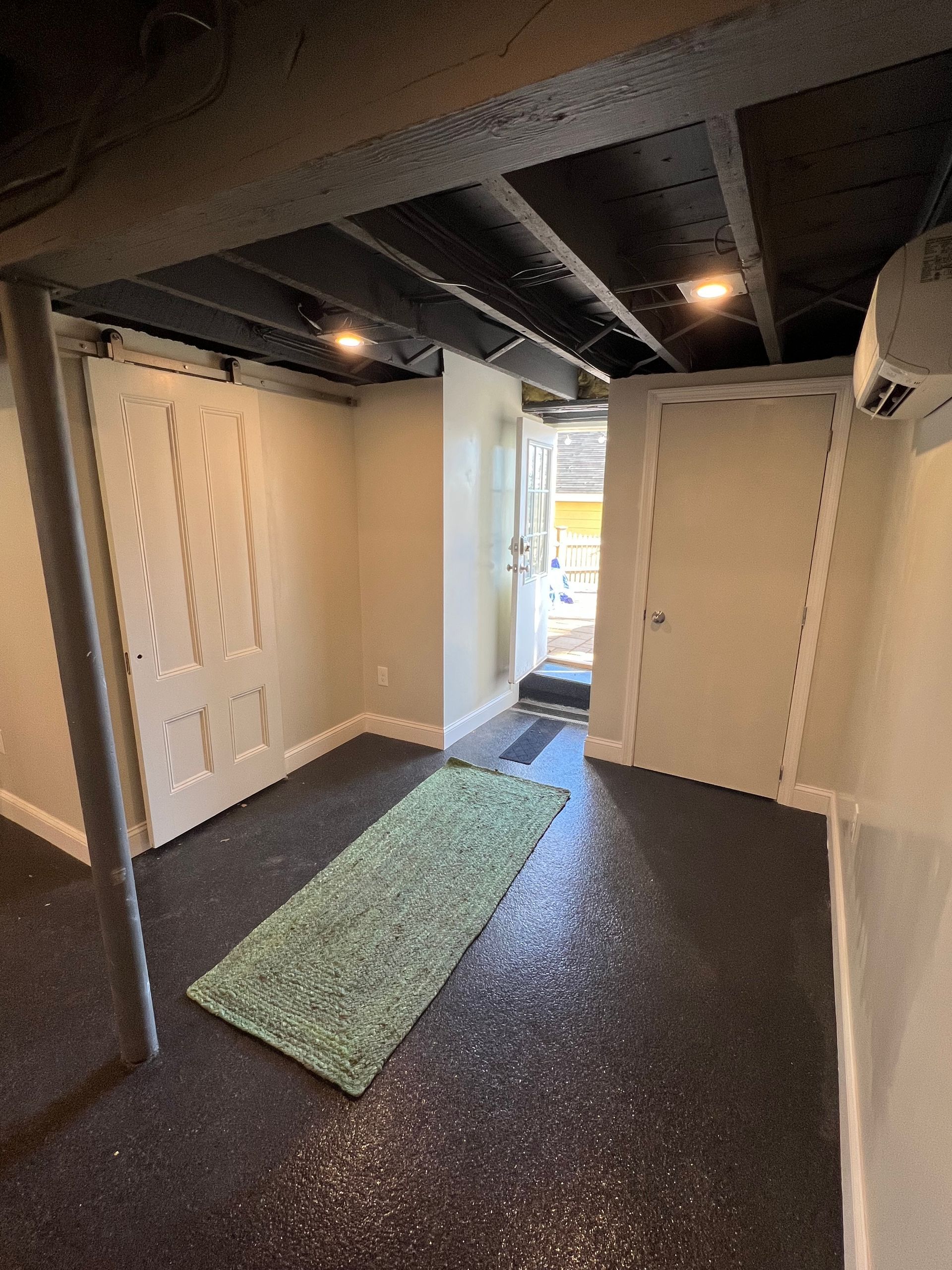
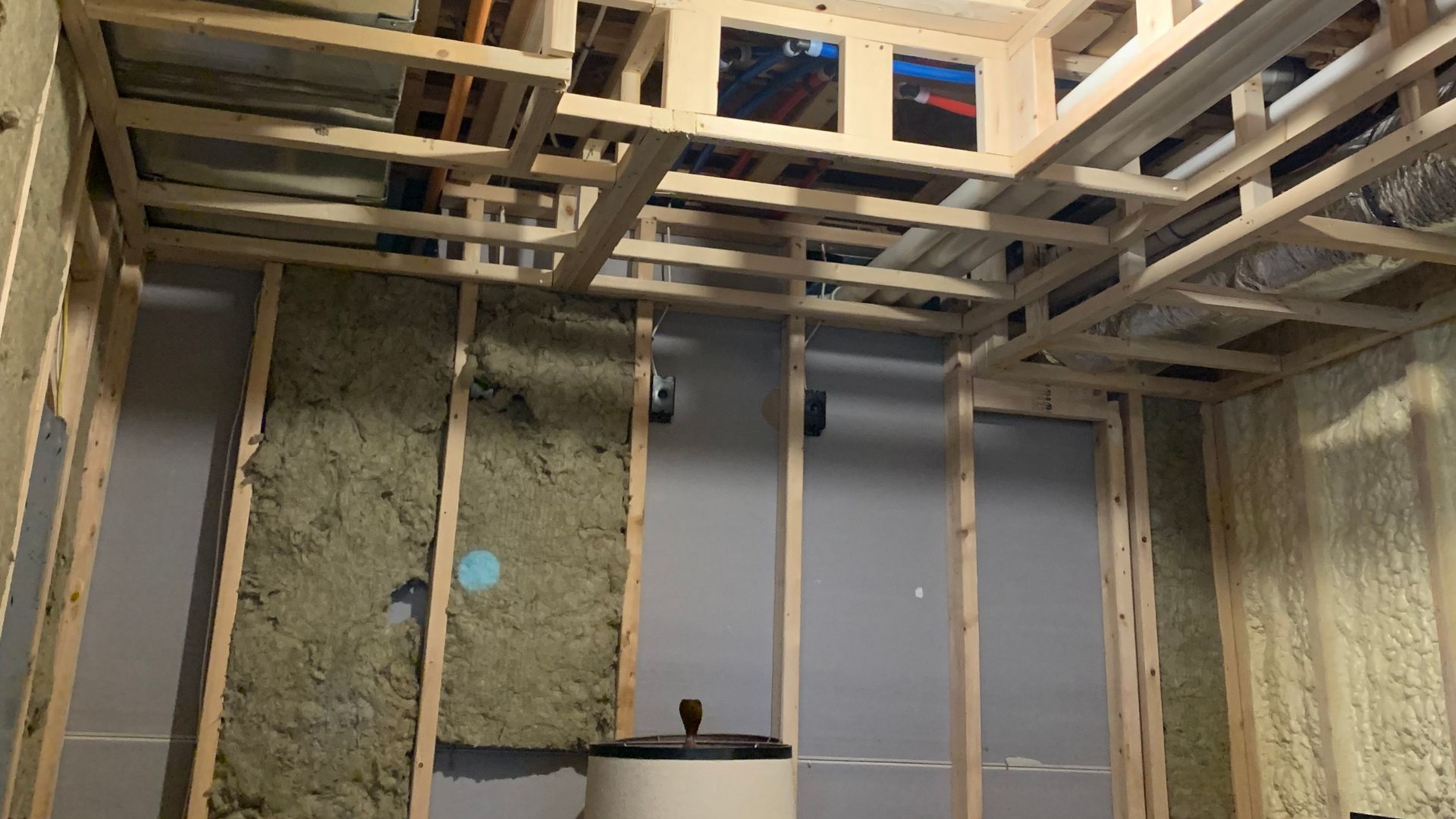
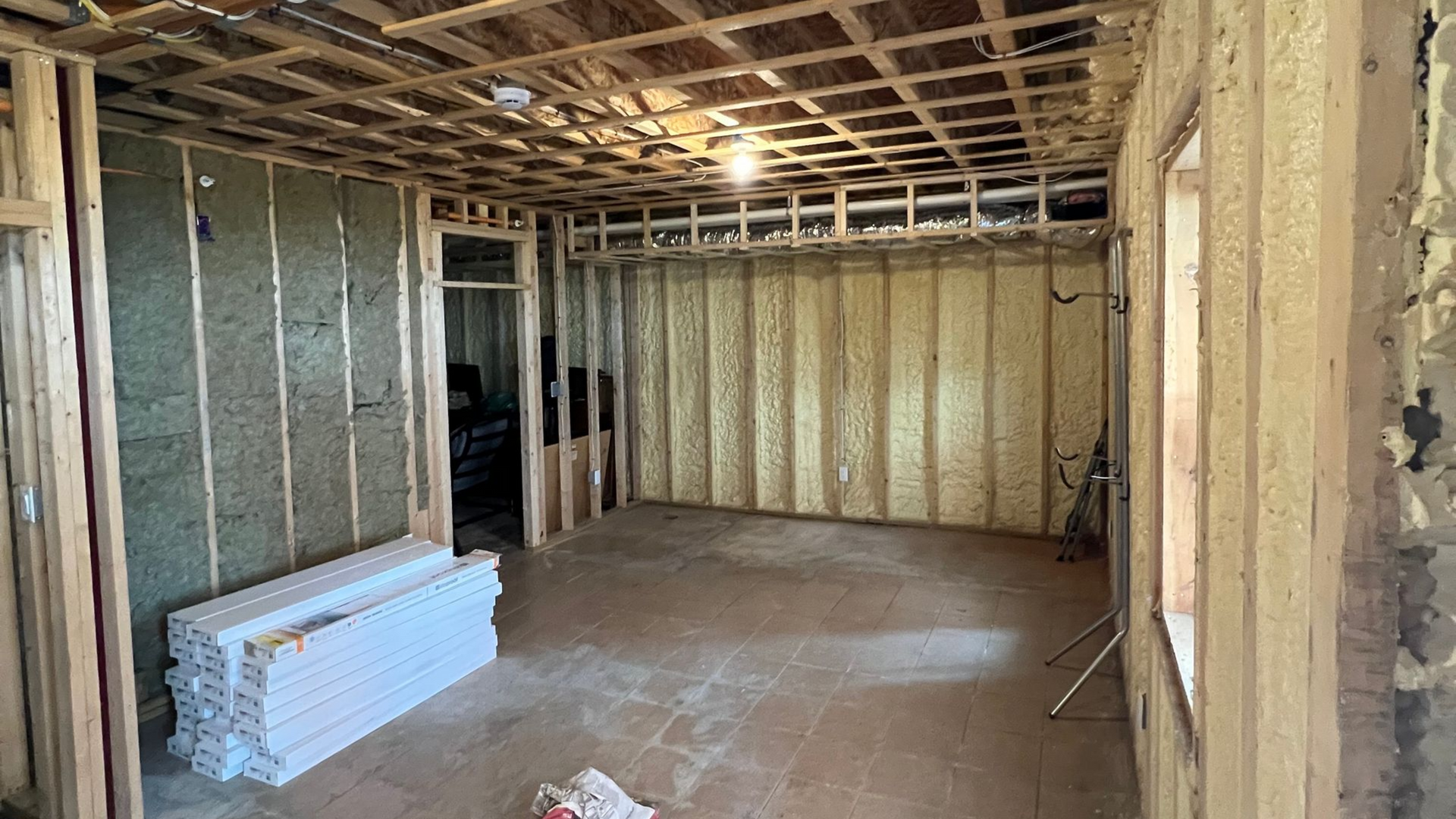
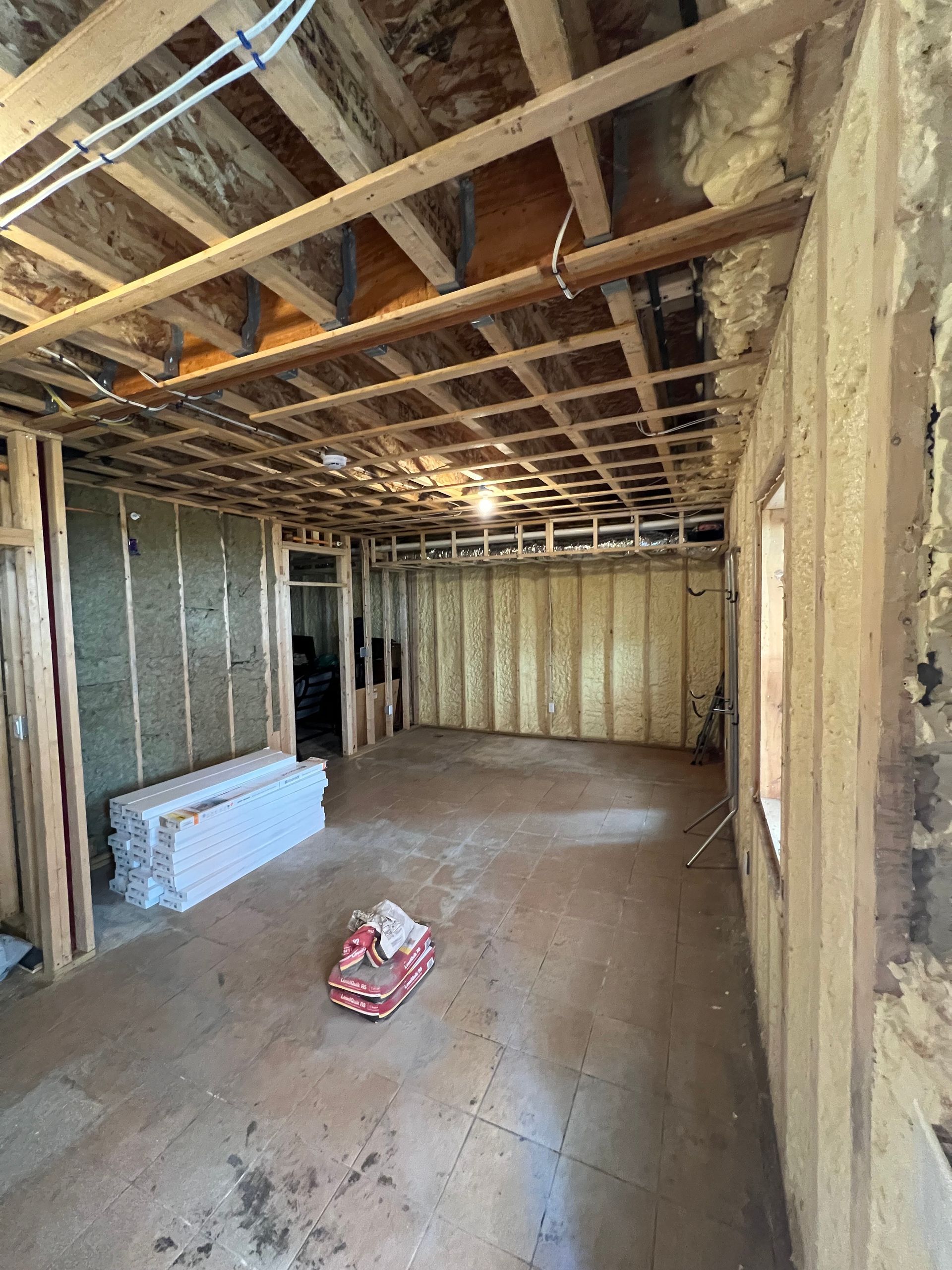
We stripped the space down to the studs and old tile subfloor, then rebuilt from there. Closed-cell spray foam insulation went into the exterior walls and ceiling, giving the basement better moisture resistance and a more comfortable temperature year round, something every basement in the Boston area benefits from given our humid summers and cold, damp winters.
New framing went in for the soffits and a few structural adjustments around the stairwell and storage closet, all while keeping the original room layout intact. There was no reason to reinvent the floor plan. The bones of this basement were fine. The problem was everything around them.
Why We Kept the Layout
A lot of basement remodels turn into bigger projects than they need to be because homeowners assume a fresh start means moving walls and reworking every square foot. That wasn't the case here.
The existing layout already made sense for the space, an open living area, a connecting hallway, and a small storage room tucked off to the side. Our job wasn't to redesign the basement. It was to fix what failed and finish it properly so it would hold up this time.
Keeping the layout also kept the timeline tight, which mattered a lot to this homeowner.
New Subfloor and LVP Flooring
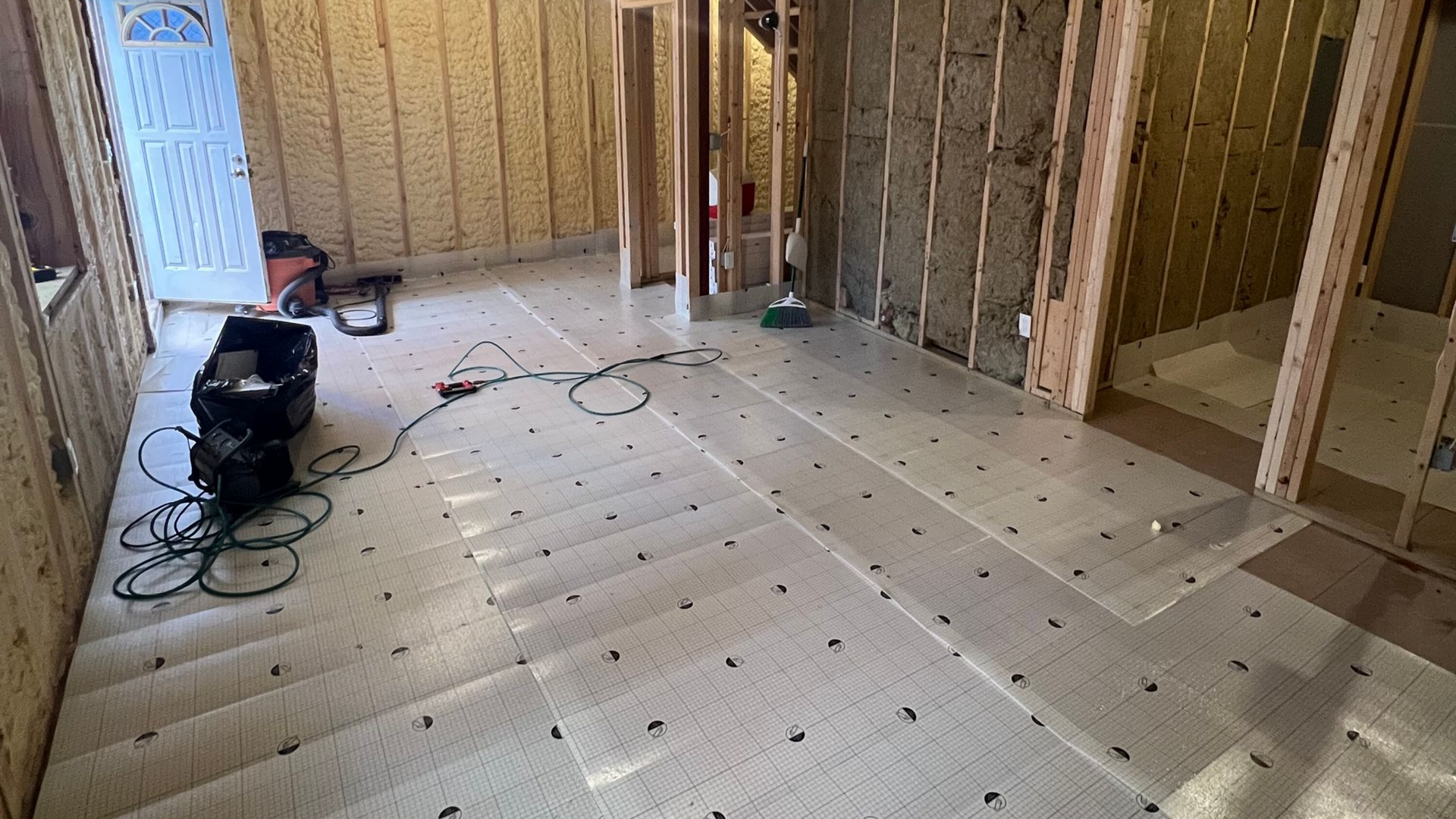
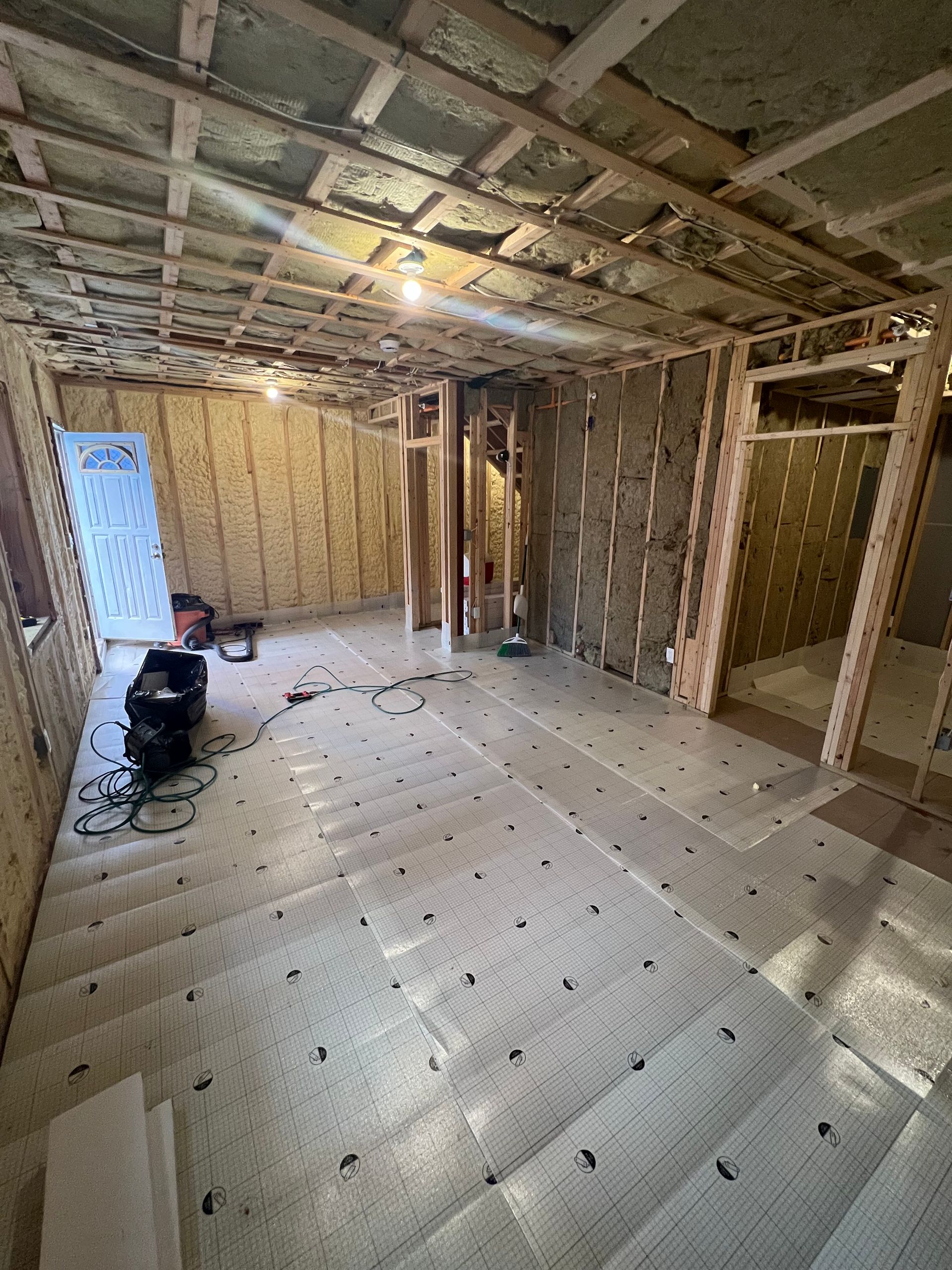
Anywhere there's been water intrusion, flooring choice matters more than almost anything else. We installed a moisture-resistant underlayment system over the original tile floor, then laid luxury vinyl plank (LVP) flooring throughout.
LVP is one of the best flooring options for Massachusetts basements. It stands up to humidity, resists warping, and still gives you the warm, natural look of hardwood, without the risk that comes with real wood in a below-grade space. If this basement ever sees moisture again, the flooring won't be the thing that suffers for it.
The new floor ties the whole space together and immediately makes the room feel less like a basement and more like an extension of the house.
Paint and Furnishings That Changed the Feel
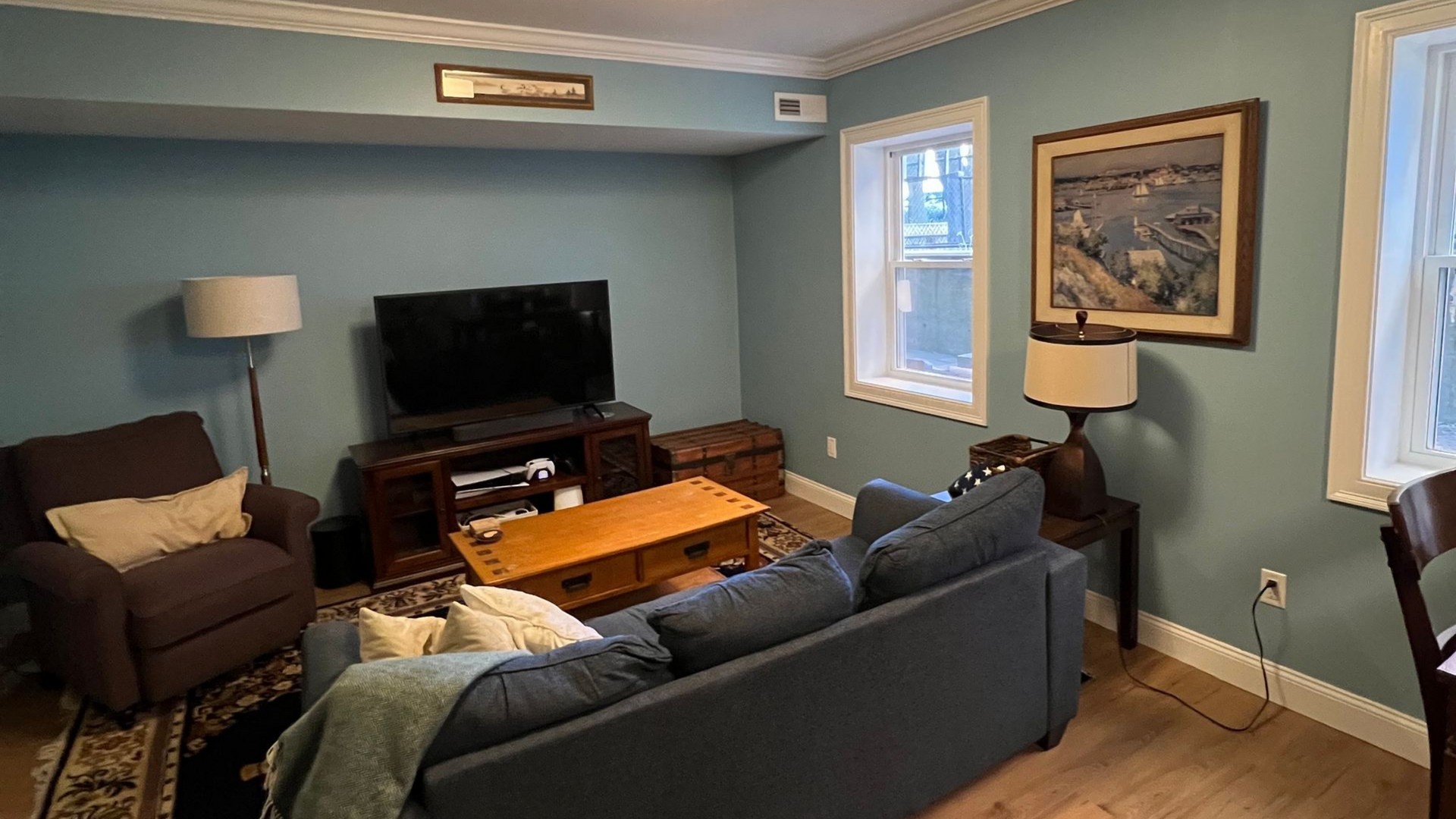
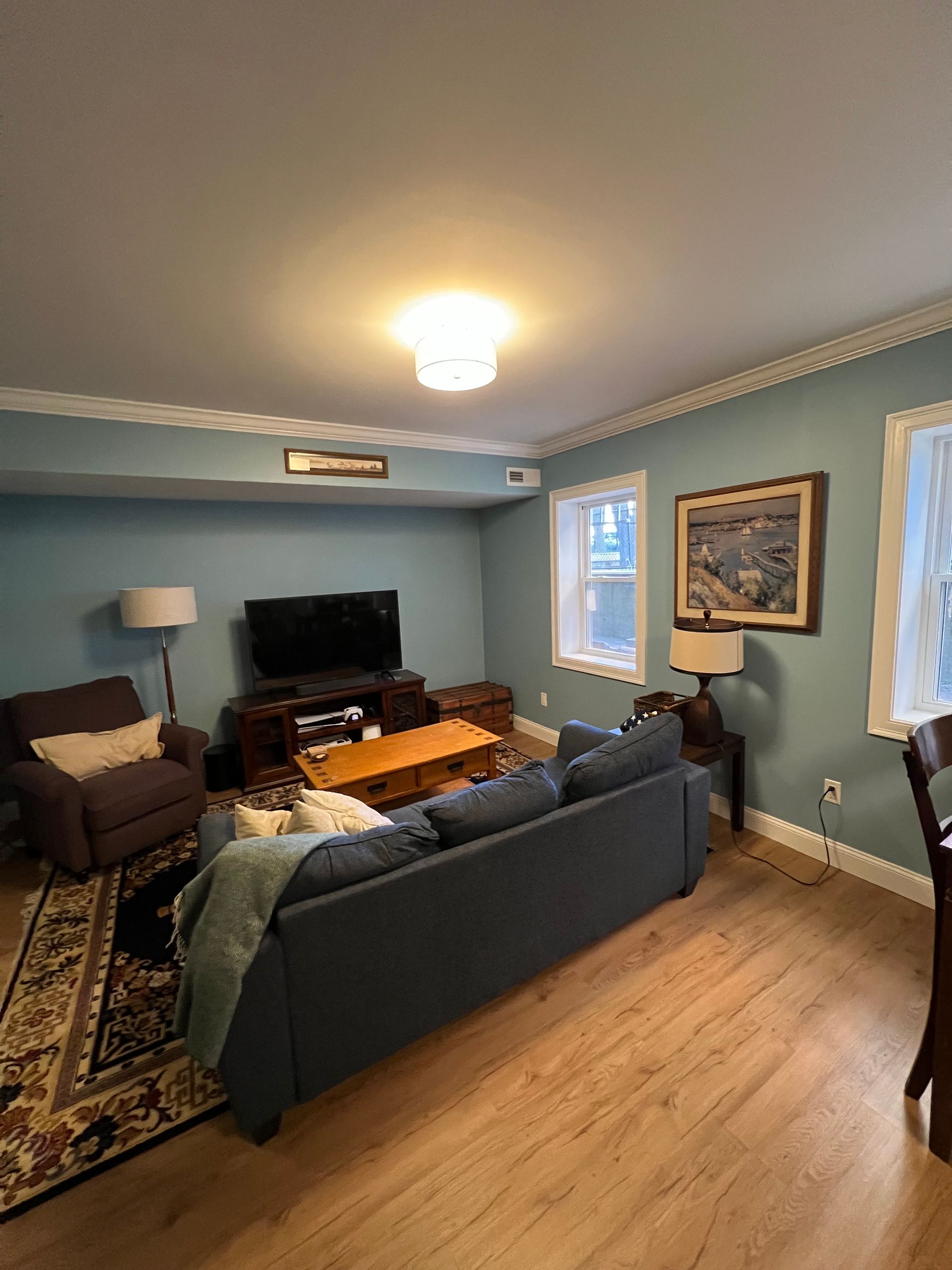
Once the framing, insulation, and flooring were done, the finishing touches made all the difference. A soft blue-gray paint color went on the walls, the kind of tone that makes a basement feel calmer and brighter instead of closed in.
We brought in fresh trim and crown molding throughout, painted clean white to match the rest of the home's finish work. New furniture rounded everything out: a comfortable sectional, a recliner, area rugs, and a media setup that turned the main room into an actual hangout space instead of a place people avoided.
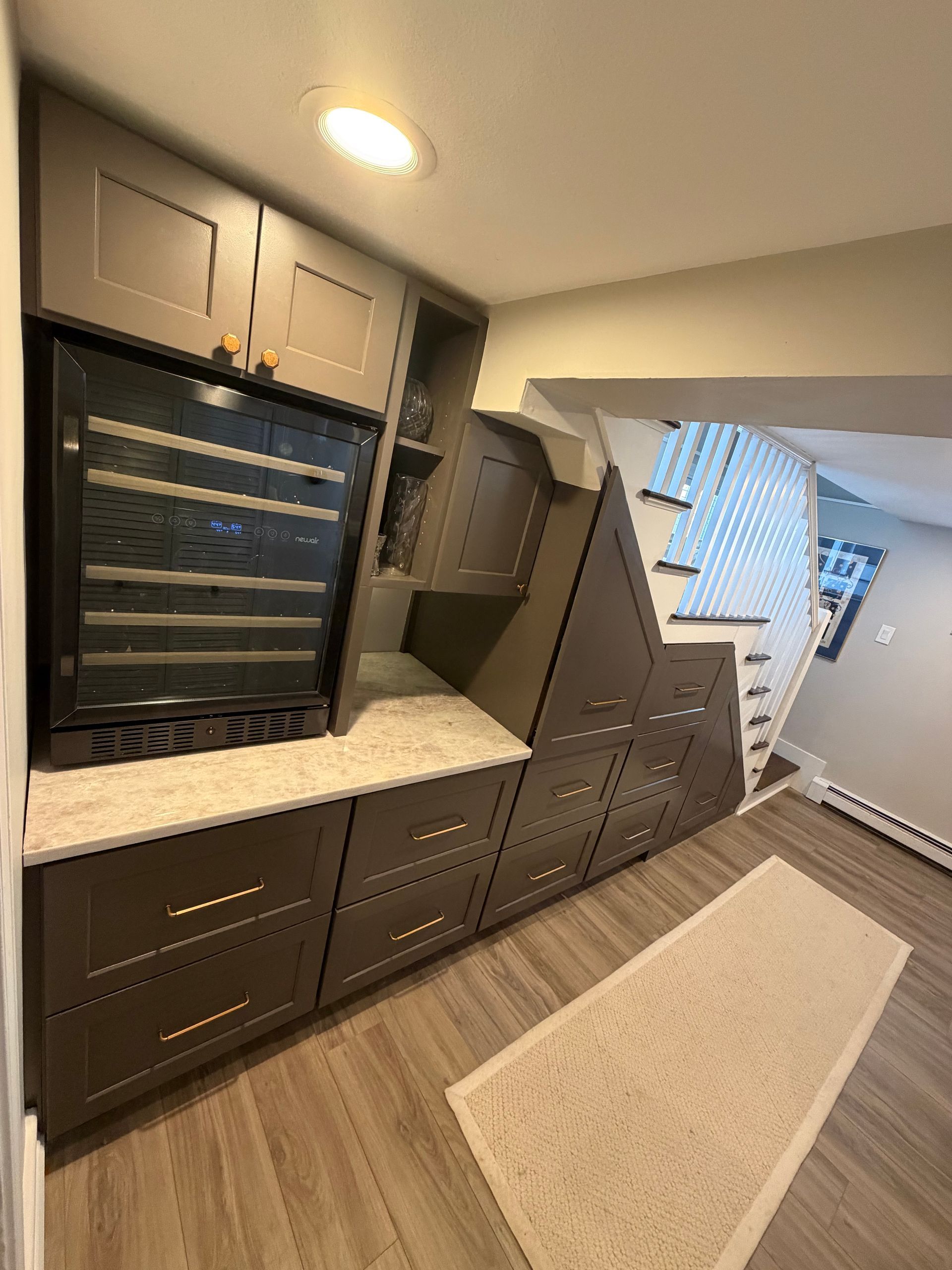
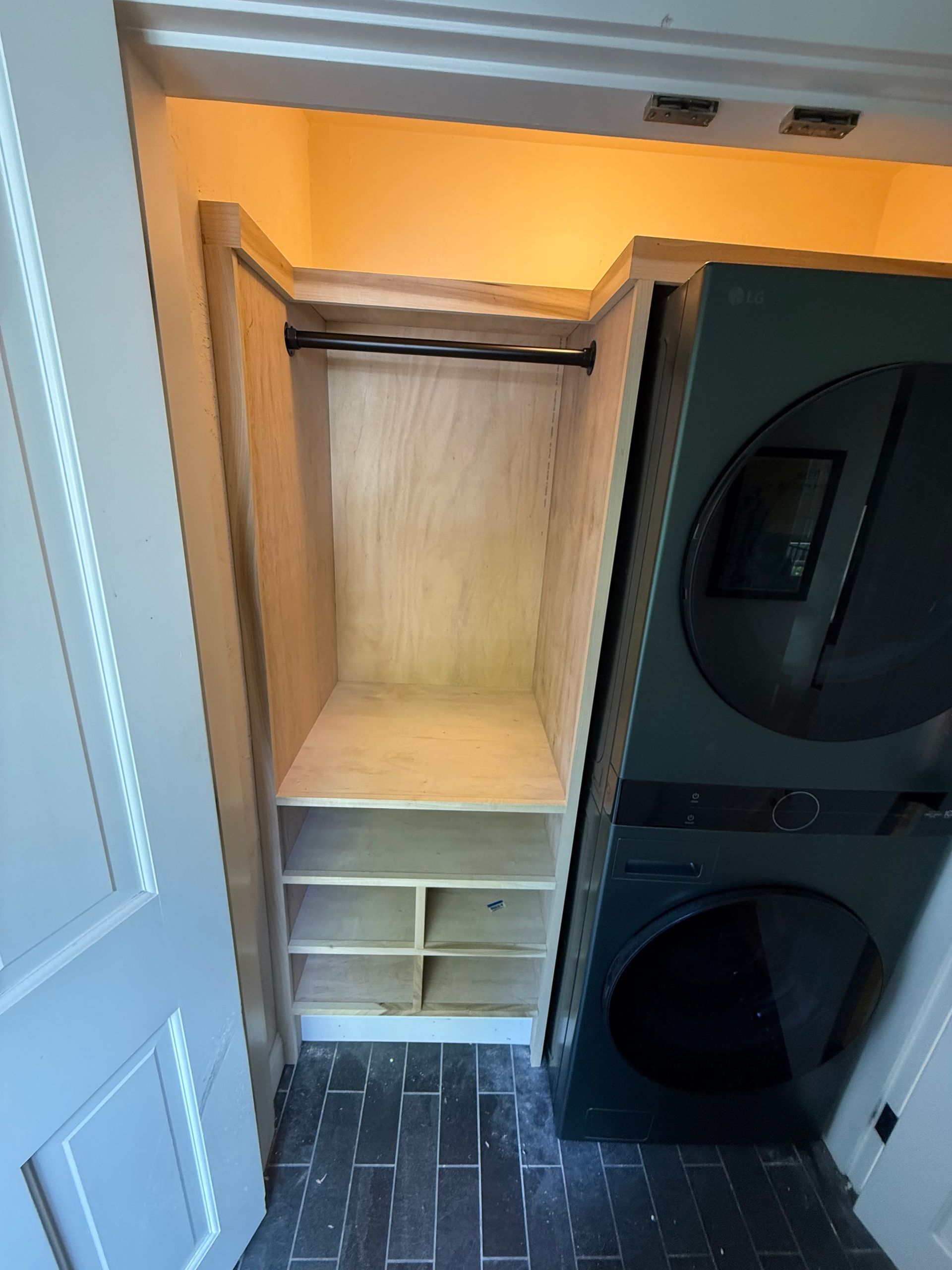
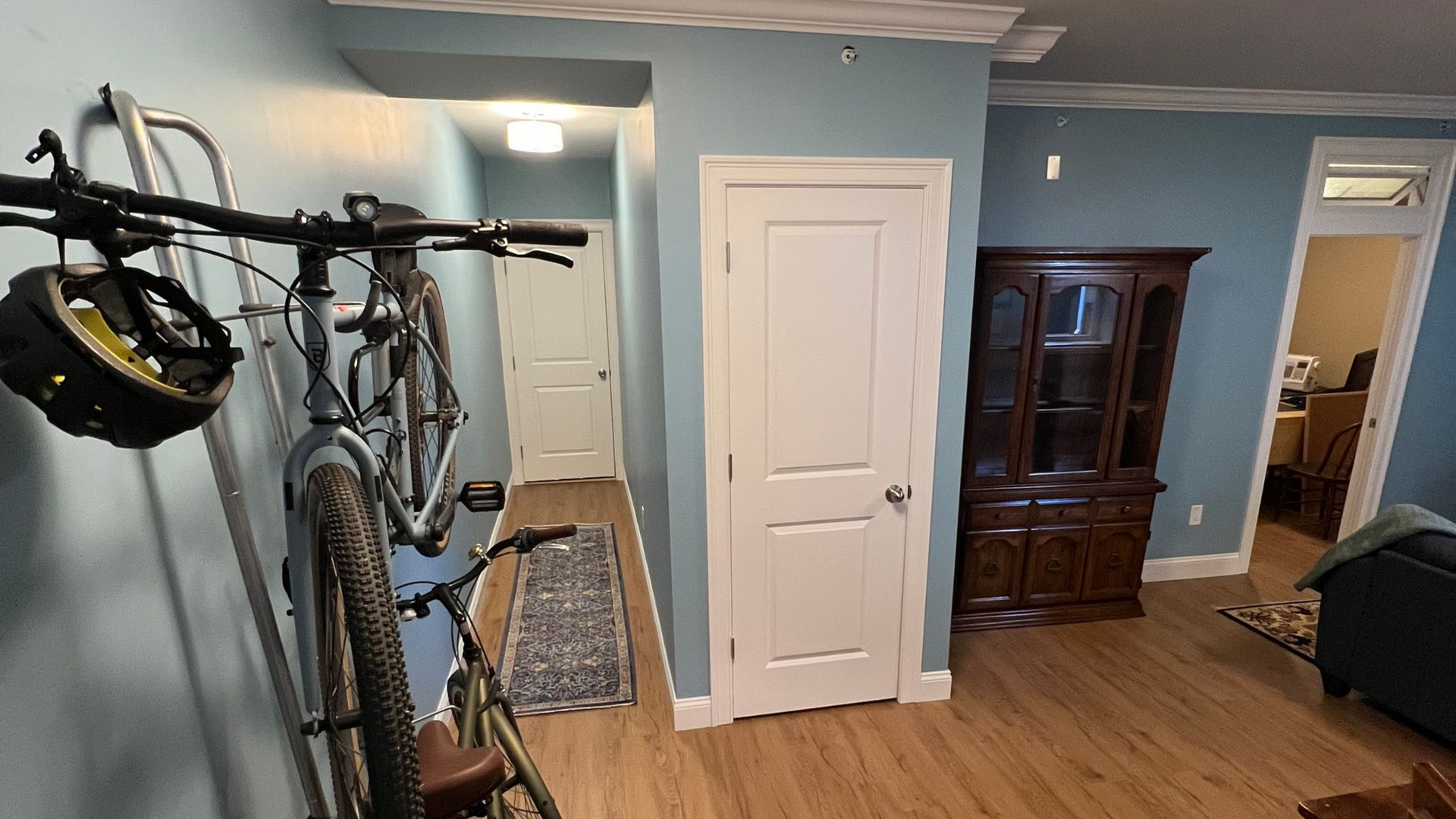
A built-in storage hutch and a dedicated bike storage spot near the entry kept the space functional too. This wasn't just a cosmetic refresh. It was a basement that finally works the way the homeowners need it to, day to day.
A Two-Week Turnaround
Basement remodels have a reputation for dragging on, especially when water damage is involved. This one didn't. From demo to move-in ready, the entire project wrapped in two weeks.
That timeline came down to planning. Because the layout stayed the same, there was no waiting on engineering changes or permit delays for structural work. Materials were ordered ahead of time, and the crew could move straight from framing to insulation to flooring to finish work without the project stalling out at any one stage.
For a homeowner dealing with a basement that's been out of commission, a fast, well-managed timeline is just as important as the final result.
What This Project Says About Basement Remodels
Not every water-damaged basement needs a complete redesign. Sometimes the smartest move is fixing the actual problem, the moisture, the old materials, the failed insulation, and finishing the space with materials built to handle a below-grade environment.
This basement is a good example of that approach. Same footprint, same flow, completely different basement to actually spend time in.
If you're dealing with a basement in Melrose, Medford, Stoneham, or anywhere else around the Boston area that's seen water damage or just never felt finished, it's worth getting a professional opinion before assuming the whole layout needs to change. Often the framing and flow are fine. It's everything around them that needs attention.
Ready to Talk About Your Basement?
A-Z Finish Carpentry handles basement remodels from the framing stage all the way through finish carpentry, flooring, and trim work. If your basement has water damage, an outdated layout, or just isn't pulling its weight as living space, reach out for a consultation. We'll take a look, tell you honestly what needs to happen, and give you a timeline you can actually count on. Contact us today!
North Shore Remodeling, Finish Carpentry & ADU Blog | A-Z Finish Carpentry